Metelliano
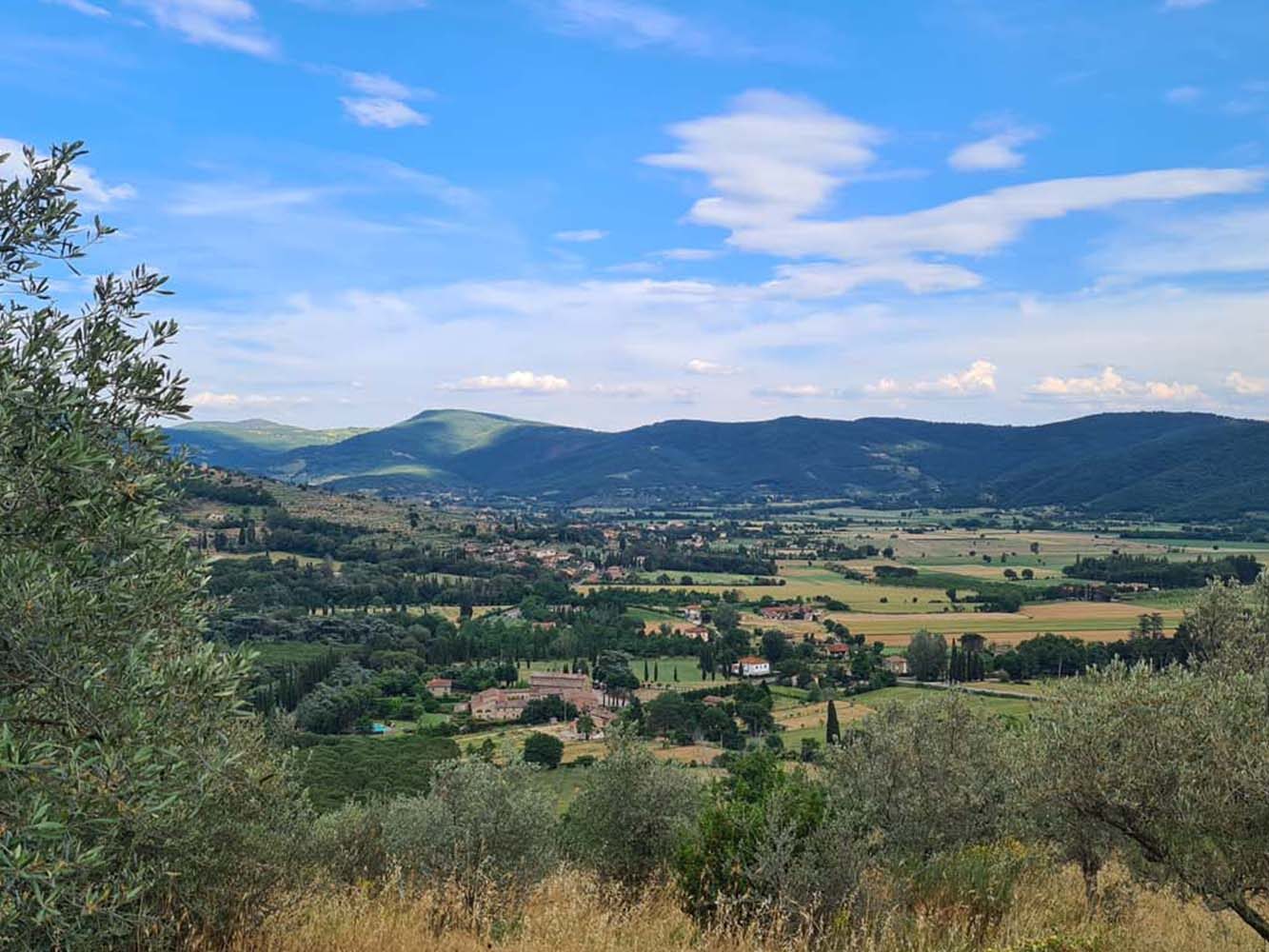
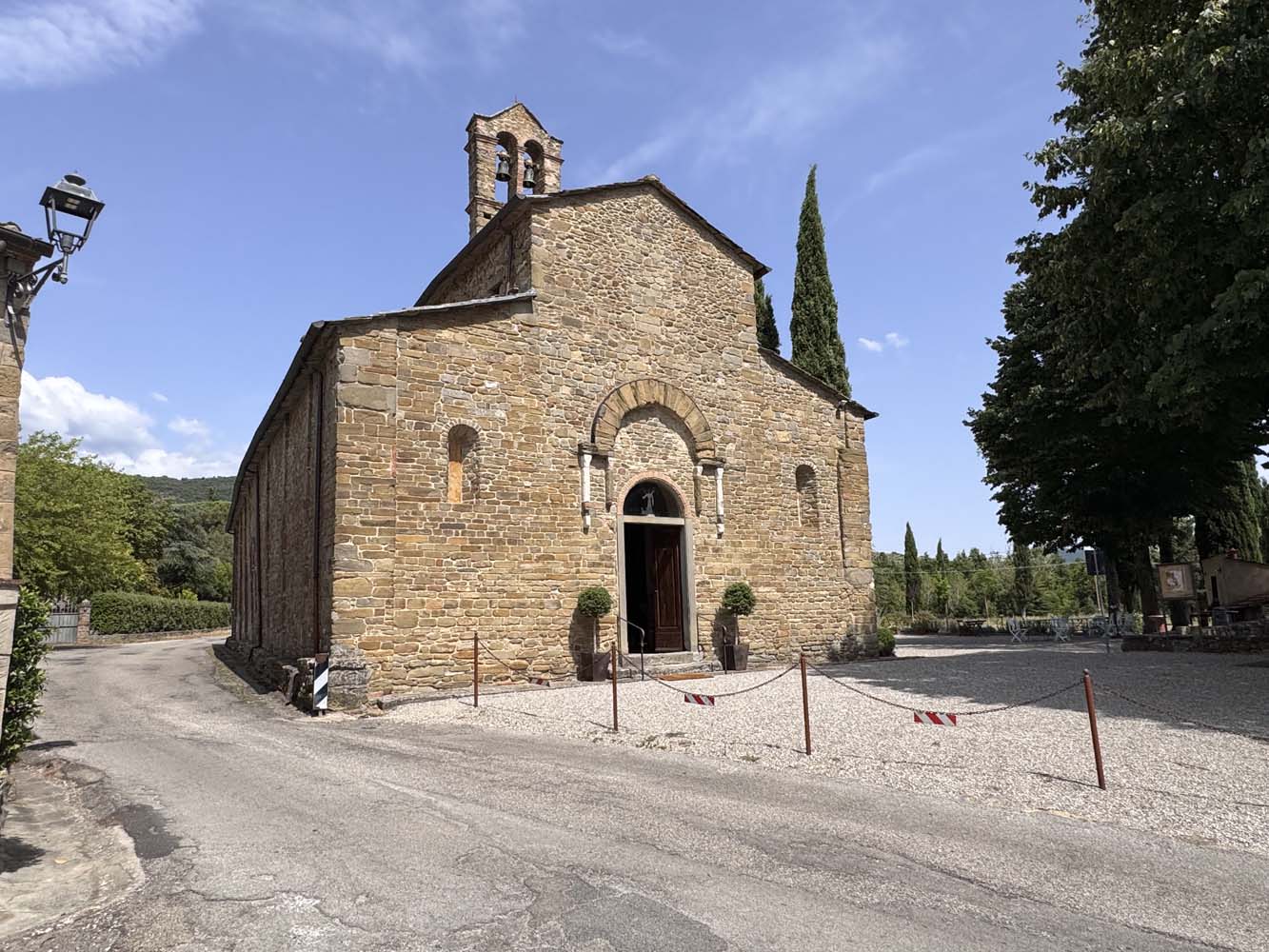
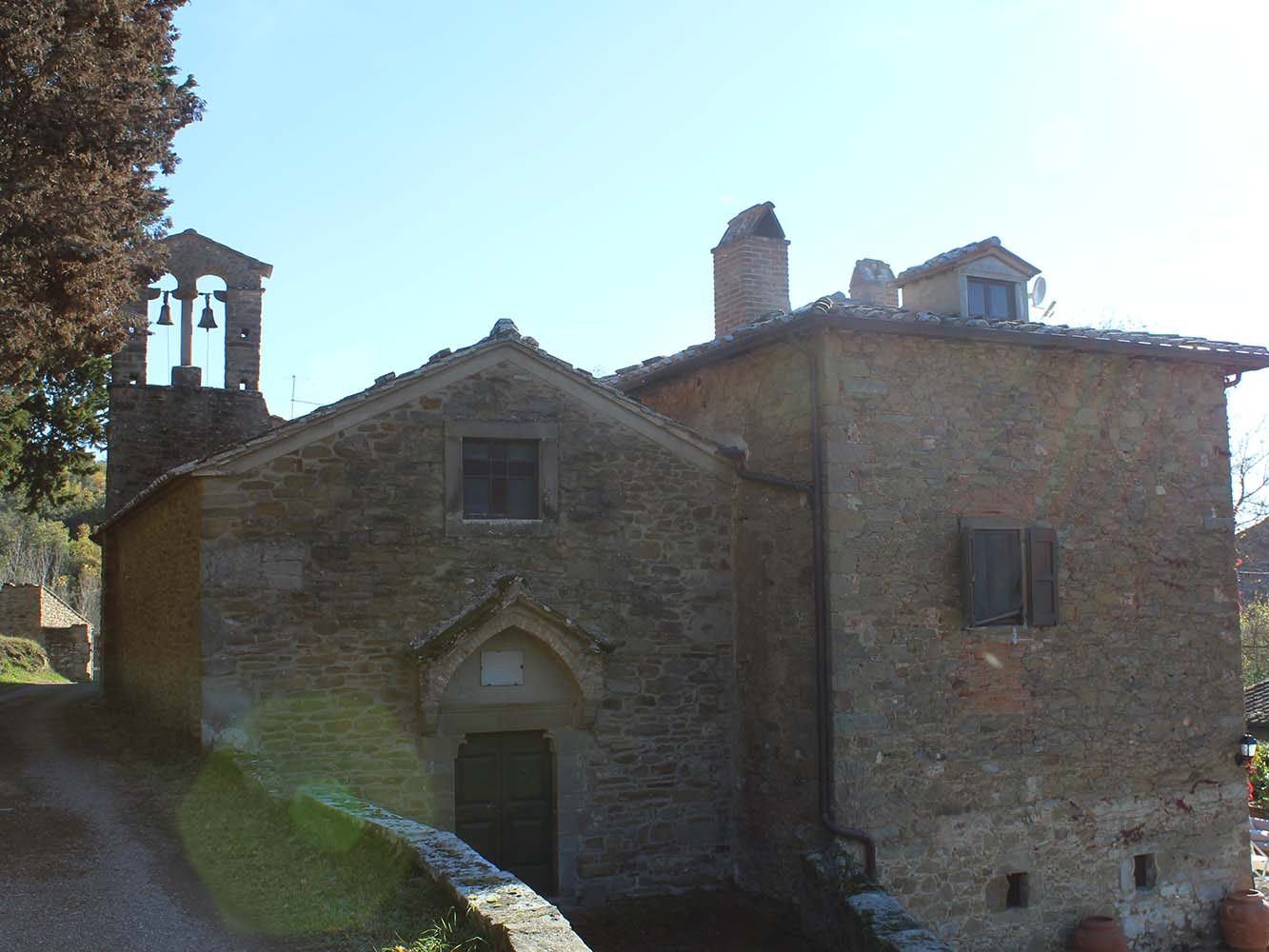
The Church of Saint Michael the Archangel, commonly called “Sant’Angelo,” stands in the locality of Metelliano, a small settlement on the slopes of Mount Sodello. Today the hamlet consists of a handful of scattered houses and, higher up, the ancient Church of Santa Maria. The name “Metelliano”, sometimes recorded as “Metegliano”, derives from the Etrusco-Roman family of the Metellii, who likely held large estates here.
Situated southeast of Cortona, the Metelliano valley is one of the most historically significant areas in the Cortona district. An Etruscan-era road once ran here, descending from Curtun (Cortona) into the valley and, right at Sant’Angelo, branching into two routes: one leading to the Niccone Valley (and thus to the Upper Tiber Valley) via Pergo and Montanare; the other toward Ossaia and Terontola, and on to the lake. In later centuries, both the Via Romea-Germanica and the Via Lauretana would pass through this very area.
The earliest known occupation of this territory – even prior to the Lombard communities thought to have settled in the valley – resembled the area’s current character in many respects. Alongside inhabited areas (villae and small villages) stood several places of worship. One of these likely stood exactly where the church of Sant’Angelo would later rise, and it was dedicated to Bacchus “Succhio” (from Latin sucus, “beverage”). Evidence includes the attested name “S. Angelo a Succhio”, as well as (perhaps) the name of the nearby stream, the “Rio Baccanella”.
Insights
Metelliano and the “Arringatore”
The place name “Metelliano” refers to a praedium, that is, a landed estate belonging to the Metellii family, who seem to have controlled the territory on the border between Umbria and Tuscany. Their surname also clearly echoes, by obvious assonance, that of the famous patrician family of the Metelli.
The Metellii – perhaps Romanised Etruscans, whose rise can be placed around the time of the Battle of Lake Trasimene, when they aided a small contingent of Romans who had escaped Hannibal’s trap – certainly belonged to the Cortonese aristocracy already in the Hellenistic period and in the early Imperial age. Some of their members are in fact recorded among those who held public magistracies in Cortona.
This family certainly included Aule Meteli, son of Vel and Vesi, portrayed as a toga-clad man with his arm raised to call for silence and the audience’s attention in the famous 2nd-century BC bronze statue known as the “Arringatore” (“The Orator”).
According to tradition, the statue was found in 1566 at Sanguineto, near Lake Trasimene on the Umbria-Tuscany border, and immediately entered the collections of Cosimo I de’ Medici. More recently, however, archival research would suggest that it was the Pope who had the monumental statue delivered into the hands of the Grand Duke of Tuscany after a farmer discovered it – also in 1566 – at Pila, a locality near Perugia.
Whatever the circumstances of the discovery, the inscription bearing the name of the Metellii and the reference to the cult of the deity Tece – recalling the place name “Teccognano” – together with the documented presence of the family in the Metelliano area, are sufficient reasons to recognise the strong link between this monument and the Cortonese family.