The Architecture of the Church
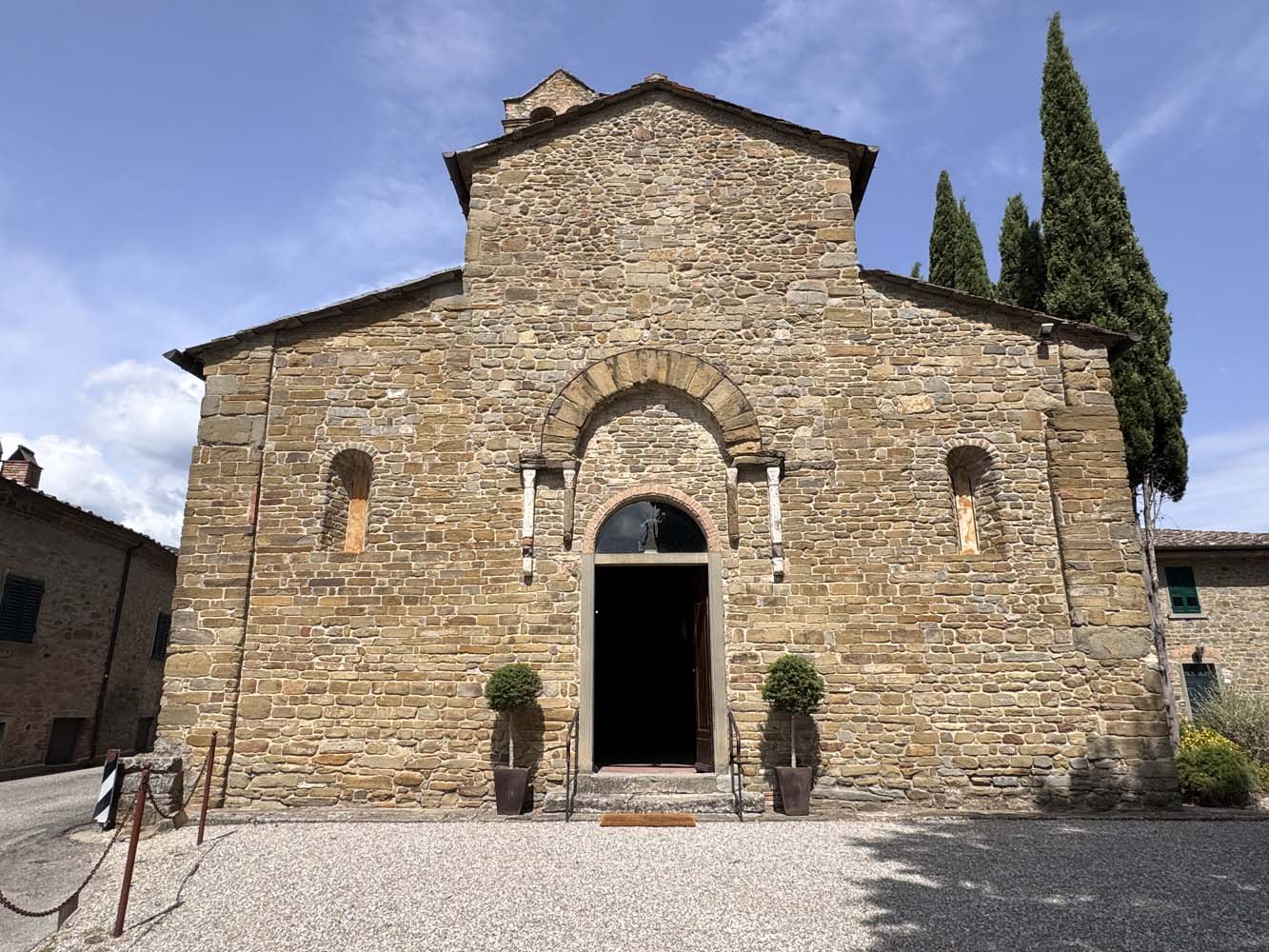
The church, designated a National Monument in 1907, is Romanesque in style. Built of local sandstone with occasional brick inserts, it features a basilica-shaped plan, meaning it has no transept.
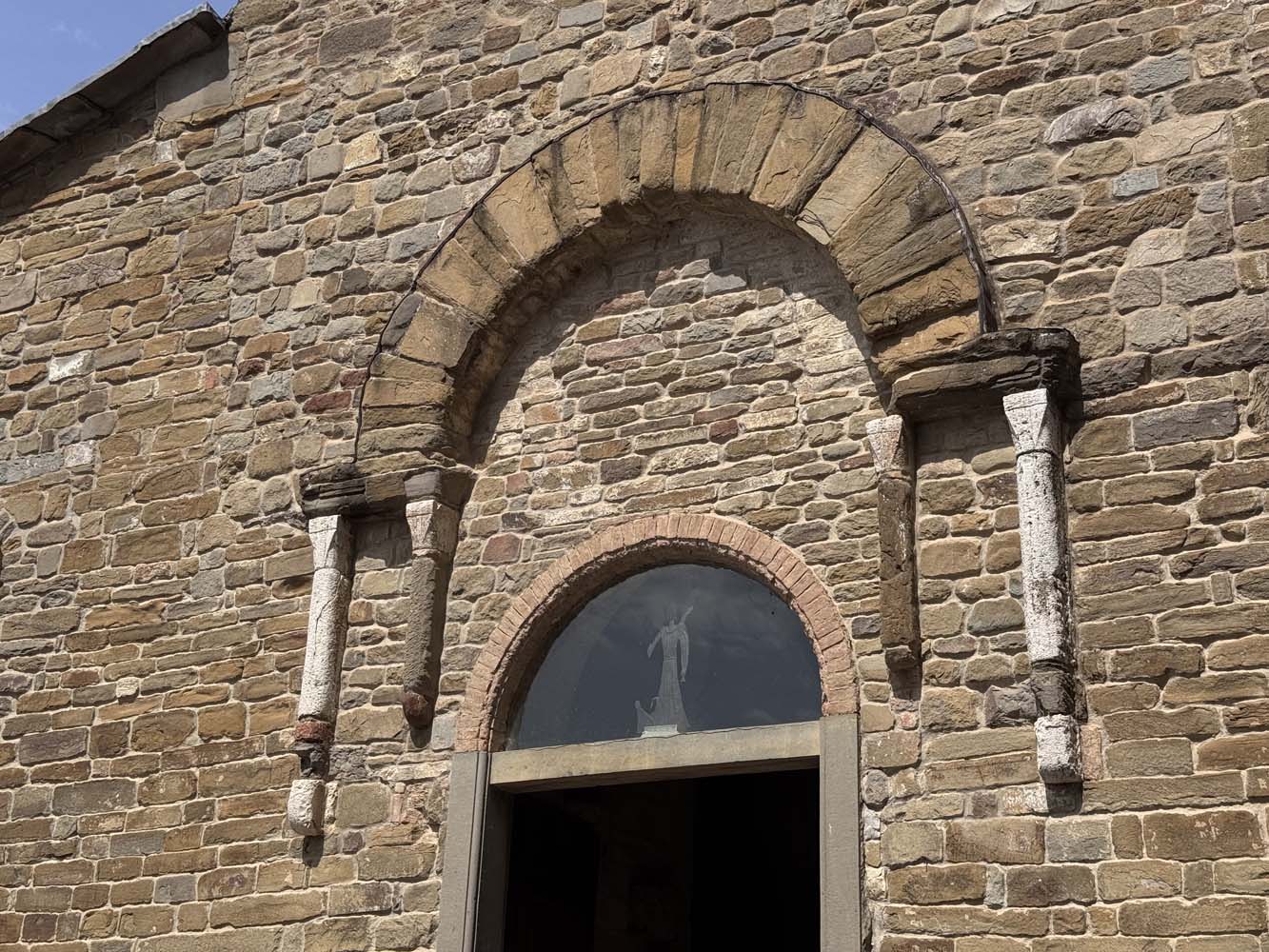
The tripartite façade reflects the three-aisled interior with terminal apses. The entrance portal, in pietra serena with a round arch, is surmounted by a projecting protiro pensile – a narrow canopy on corbels – with small columns and travertine capitals. Flanking the doorway are two single-light windows (monofore), now walled up. Irregularities in the masonry suggest the church was set on a preexisting tower incorporated into the façade. This tower likely served as a belfry until the present campanile was built in 1439, which required its partial demolition.
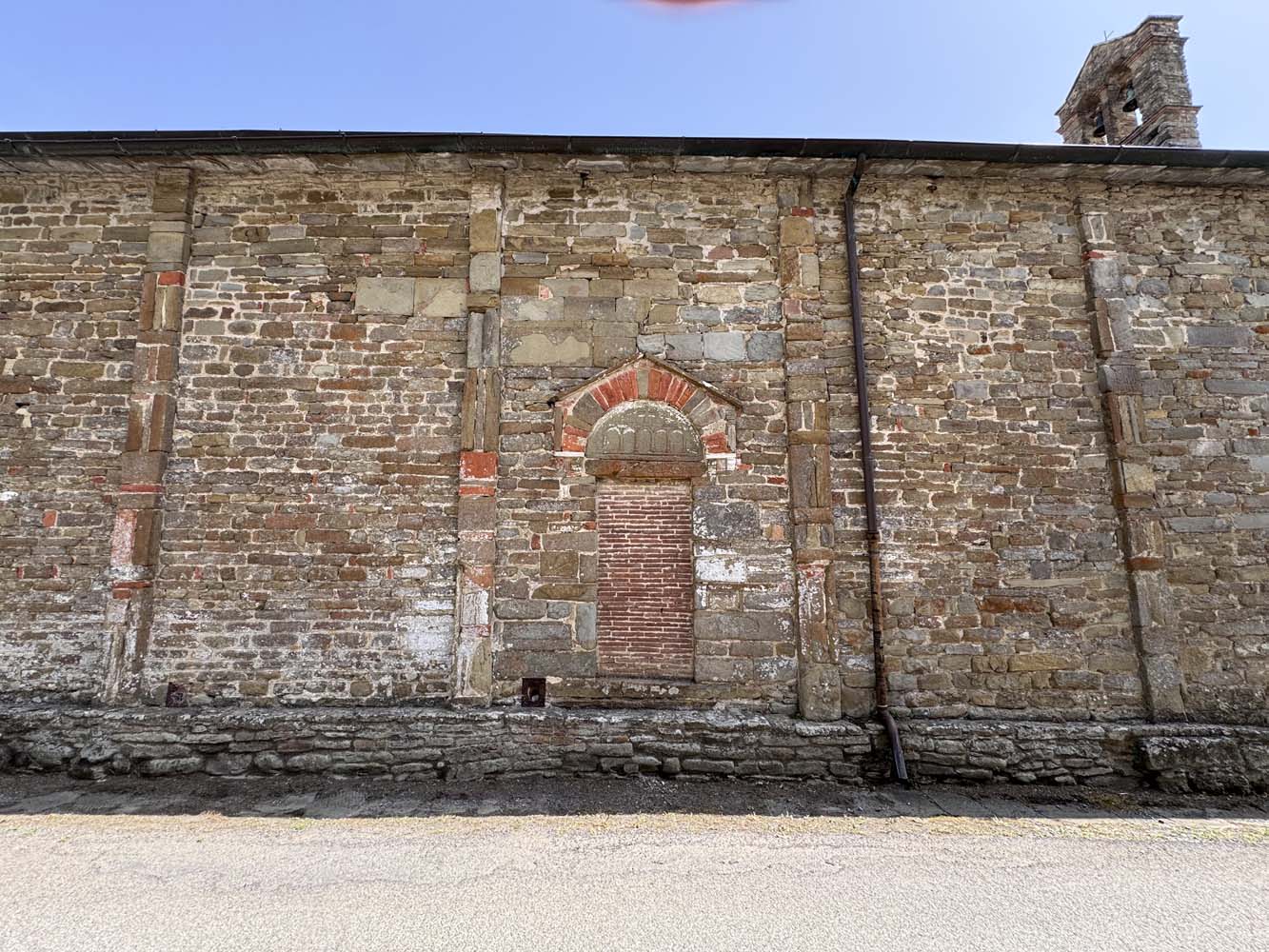
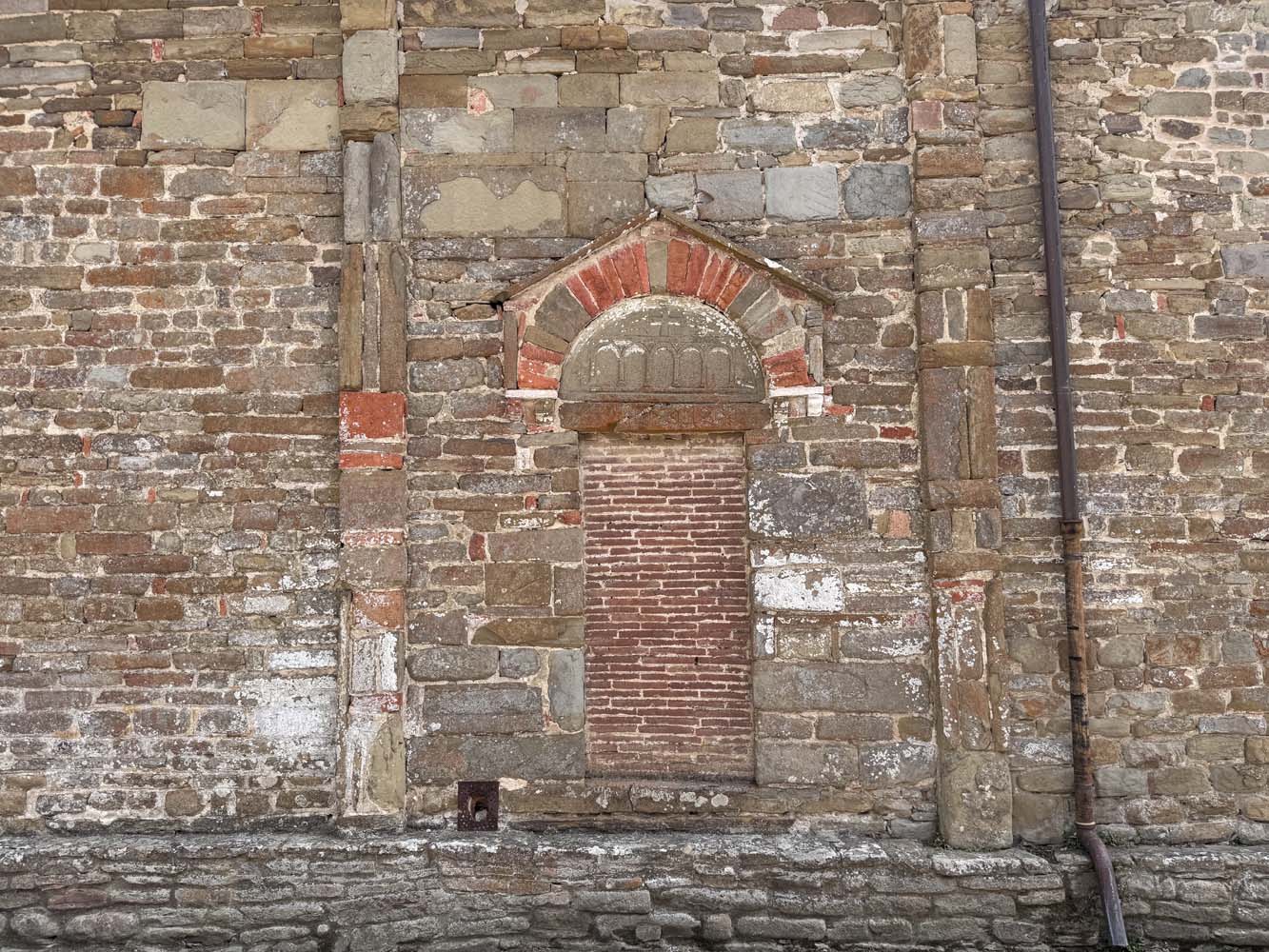
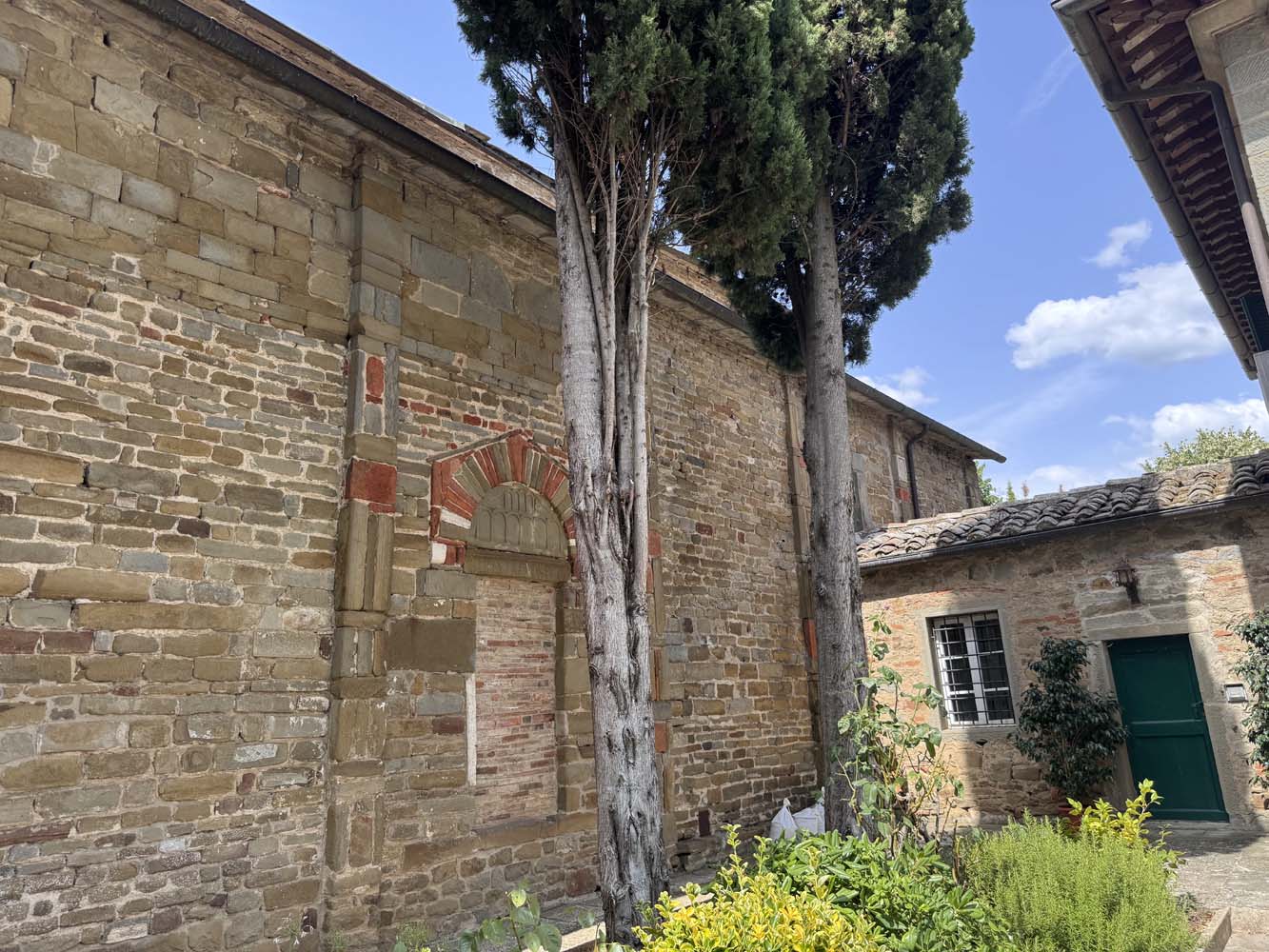
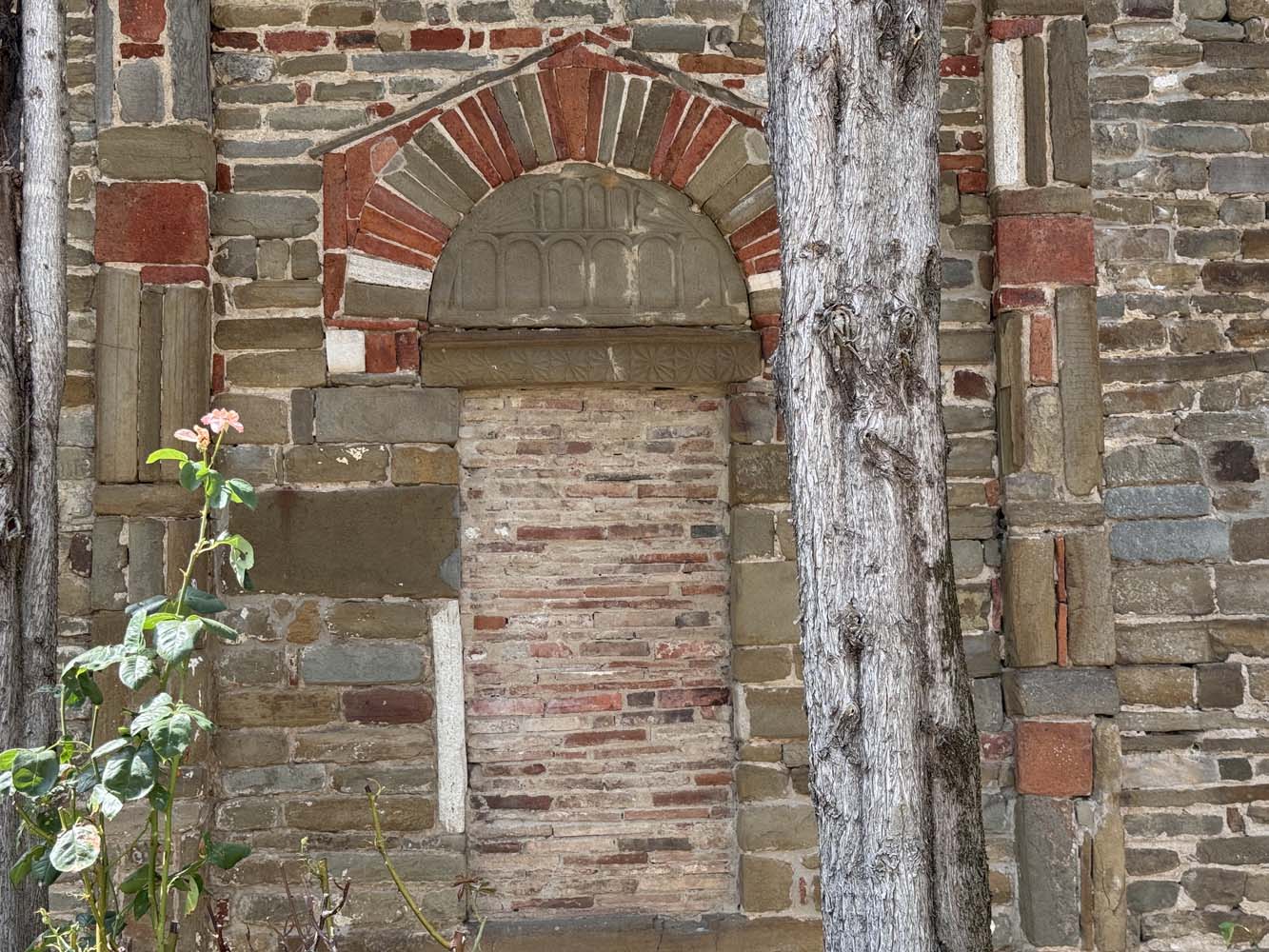
Along the side walls run lesene (pilaster strips), vertical projections that evoke decorative piers. On both sides are two doors (now blocked), with architraves and sandstone lunettes carved in low relief; the lunettes are framed by elegant brick arches. The rectory (canonica) adjoins the right flank, with access also from inside the church.
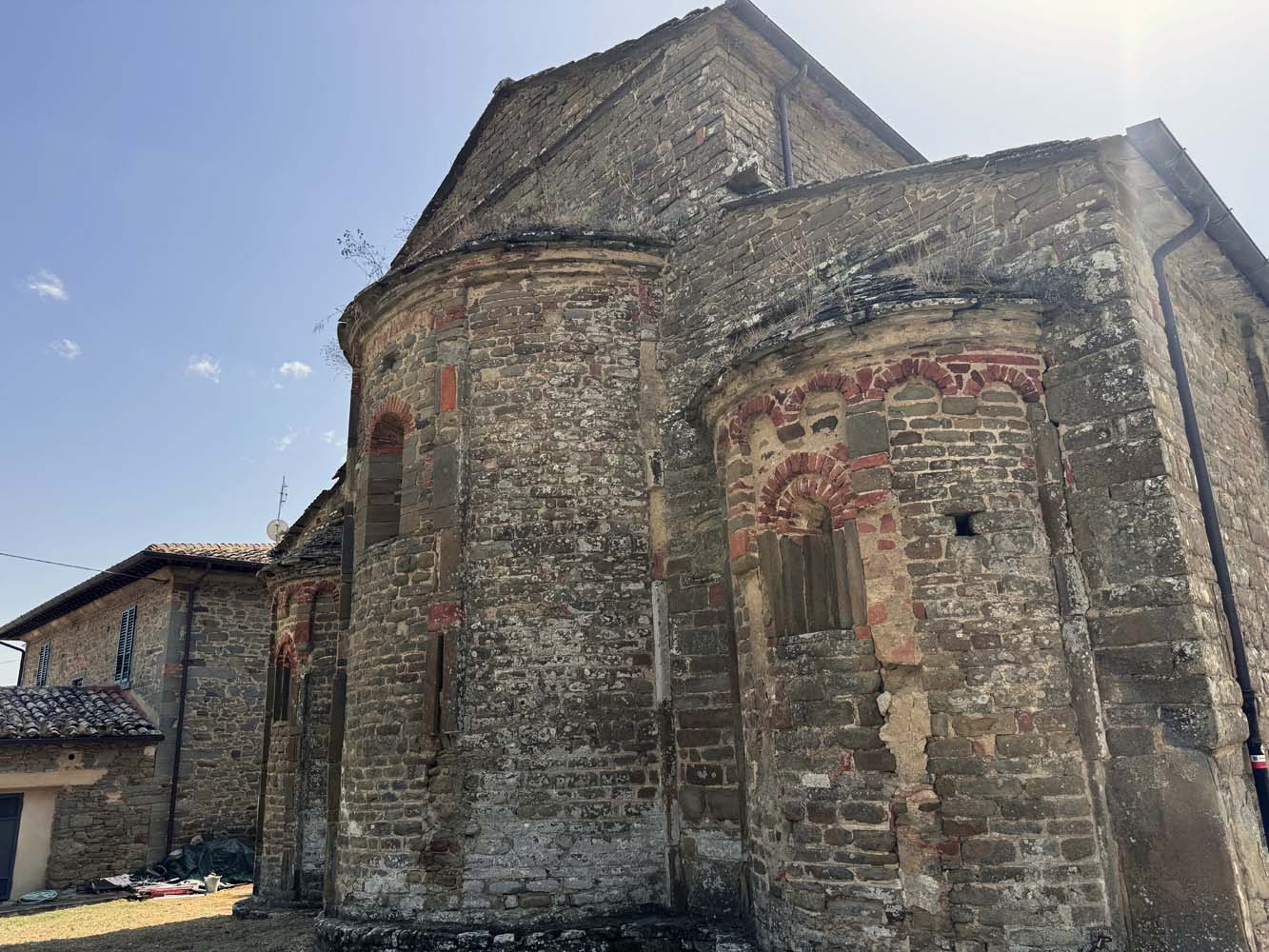
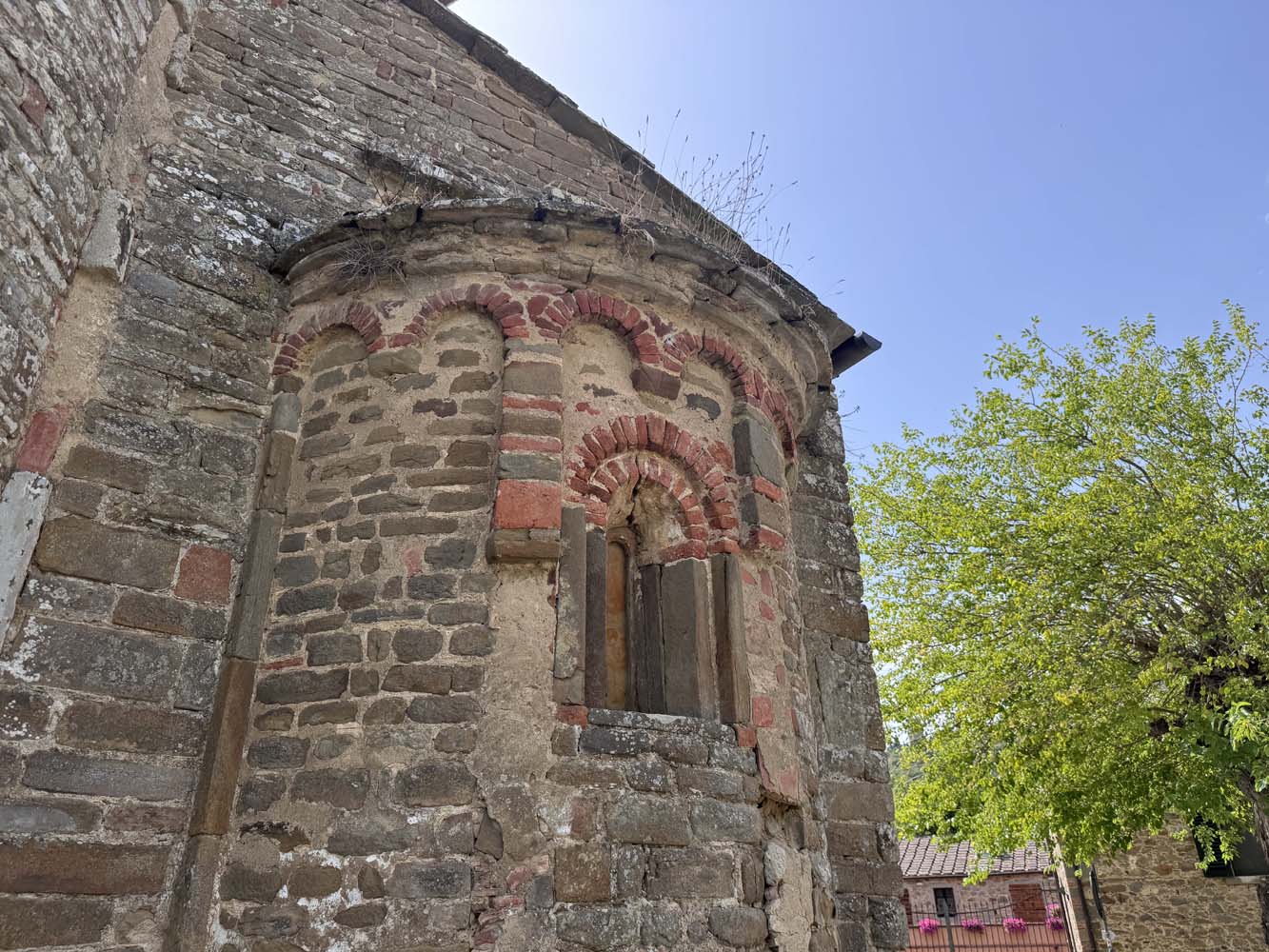
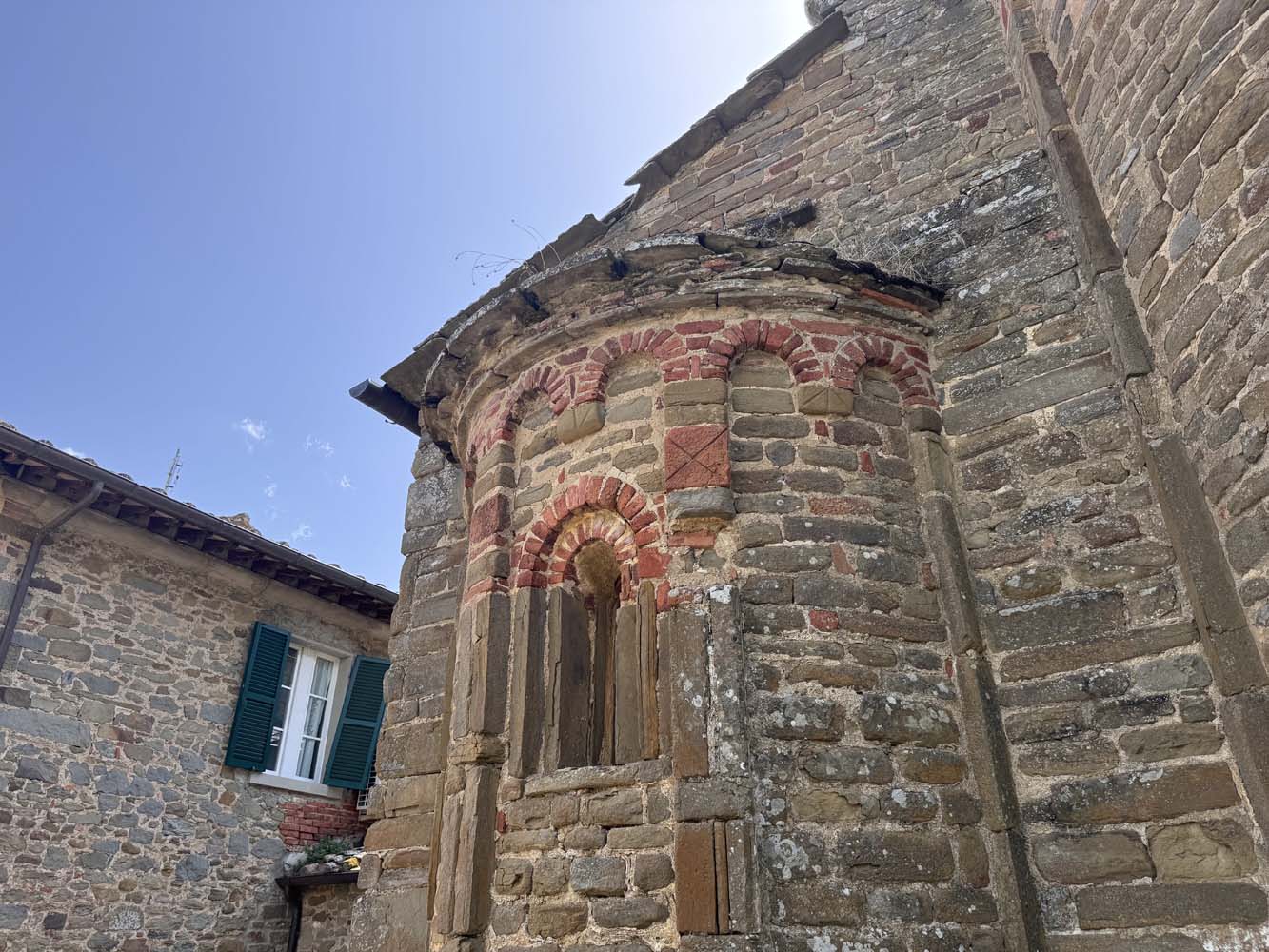
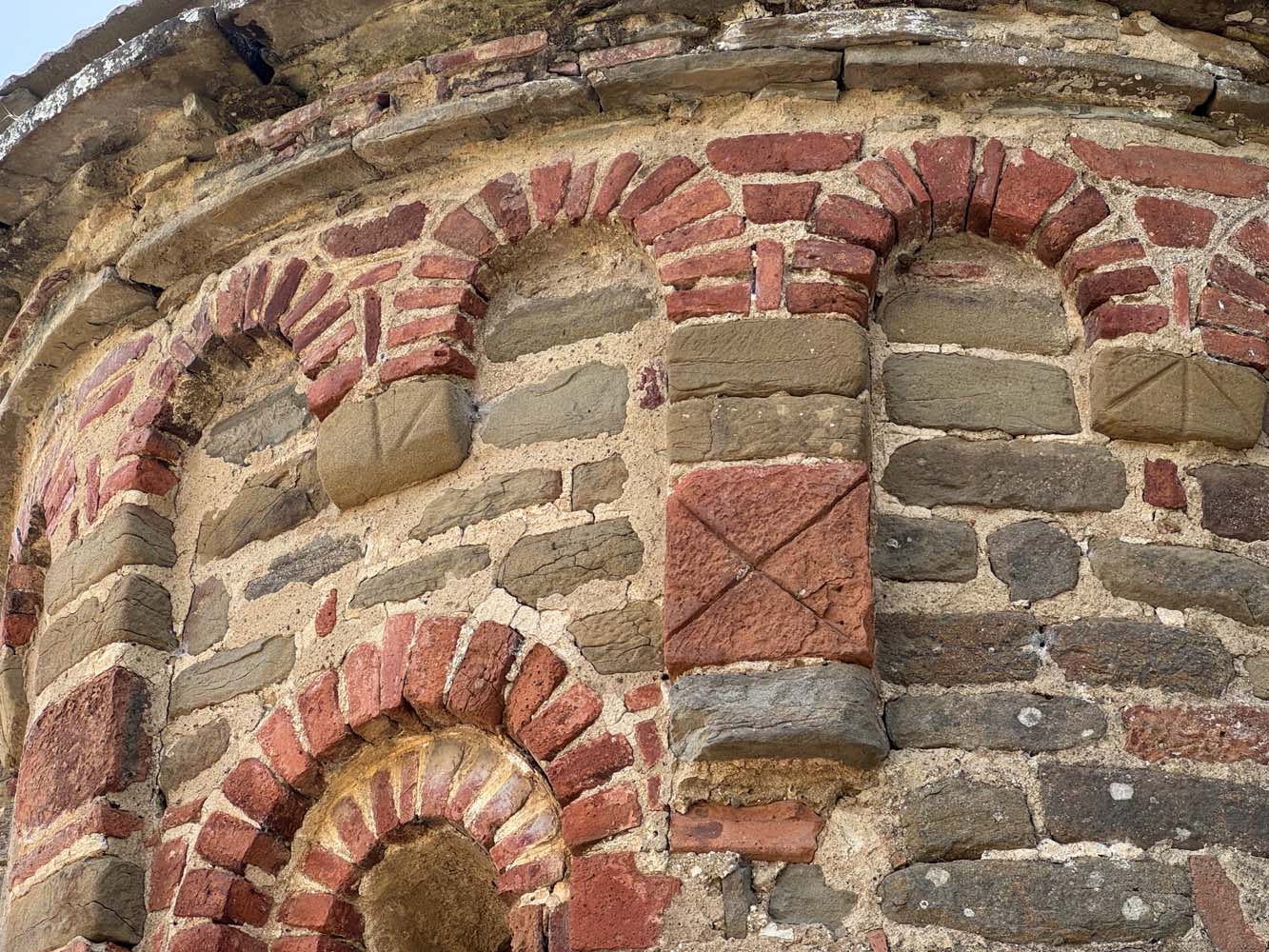
The rear of the building – formerly fronted by a small cemetery – is marked by three semicircular apses. Each has a central single-light window (monofora), a semi-conical roof of stone slabs, and lesene decoration. Unlike the central apse (probably the oldest), the two lateral apses are crowned by a corbel table of small brick arches.
Approfondimenti
Decorazioni
La chiesa di San Michele Arcangelo, comunemente detta “Sant’Angelo”, sorge presso la località Metelliano, il piccolo abitato alle pendici del Monte Sodello. La frazione è costituita oggi da poche abitazioni sparse con, nella parte alta, l’antica chiesa di Santa Maria. Il toponimo “Metelliano”, talvolta attestato come “Metegliano”, deriva dalla famiglia etrusco-romana dei Metellii, che qui doveva avere importanti possedimenti.
Torre
Di derivazione simile è il toponimo “Tecognano” che identifica la vicina località: esso potrebbe però riferirsi al nome di una divinità etrusca, Tece Sans.