
Discover San Michele Arcangelo in Metelliano
A place of worship, community, and history
Metelliano
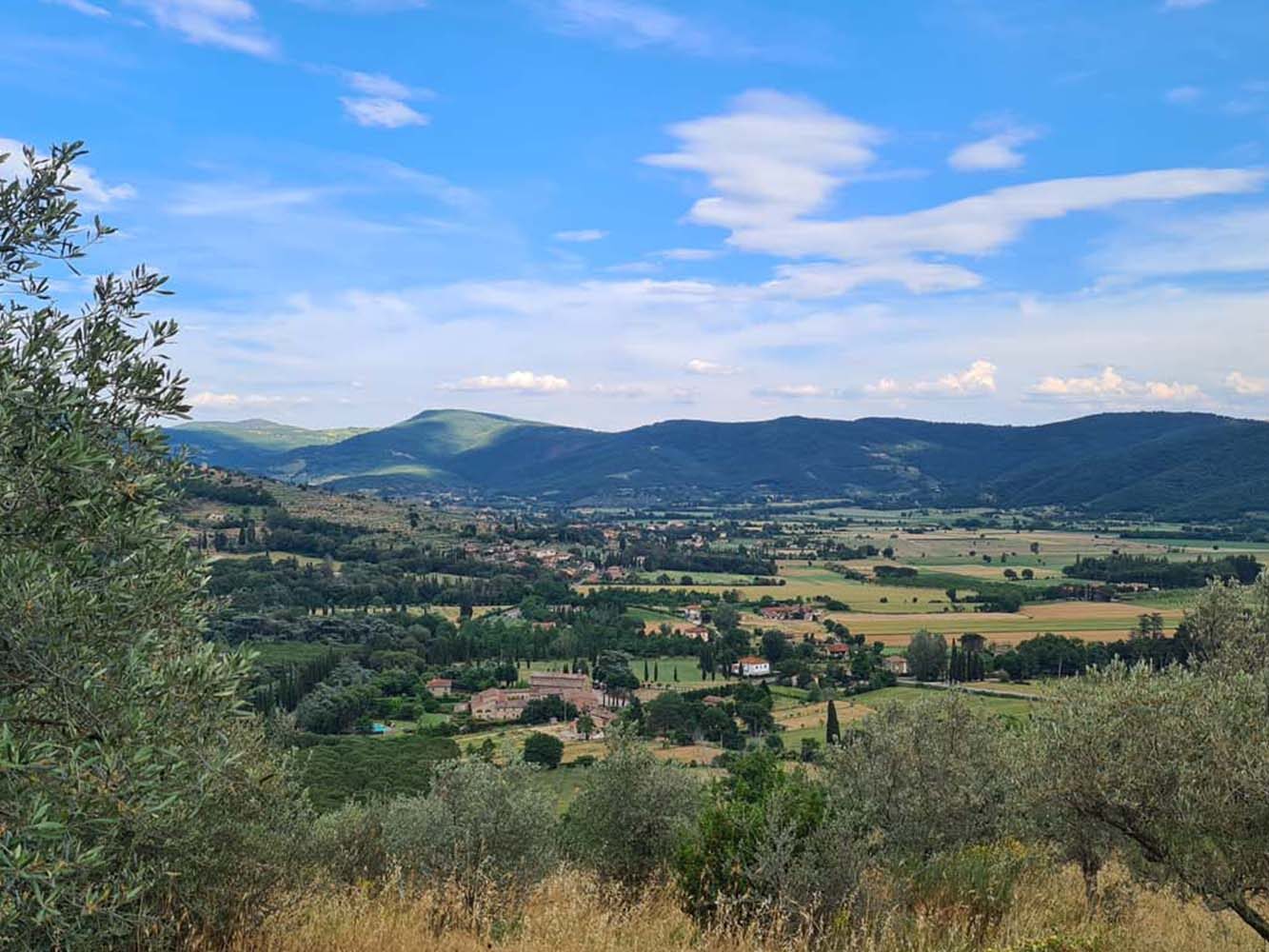
The Church of San Michele Arcangelo, commonly known as “Sant’Angelo,” stands near the hamlet of Metelliano, a small settlement at the foot of Monte Sodello. Today the area is made up of just a few scattered homes, with the ancient Church of Santa Maria on the upper side. The place name “Metelliano,” sometimes recorded as “Metegliano,” derives from the Etruscan-Roman Metellii family, who likely owned significant estates here.
History of the complex
The first mention of the Church of Sant’Angelo in Metelliano appears in a document dated 1014, issued by Emperor Henry II: the building is listed among the possessions of the Abbey of Farneta.
The church’s current appearance reflects the many restorations and alterations carried out over time. Its construction, in the form we know today, dates back to the first half of the 11th century and is probably attributed to the Aretine architect Maginardo, who created a Romanesque-Byzantine style building while preserving several elements of the earlier structure.
The Archangel Michael
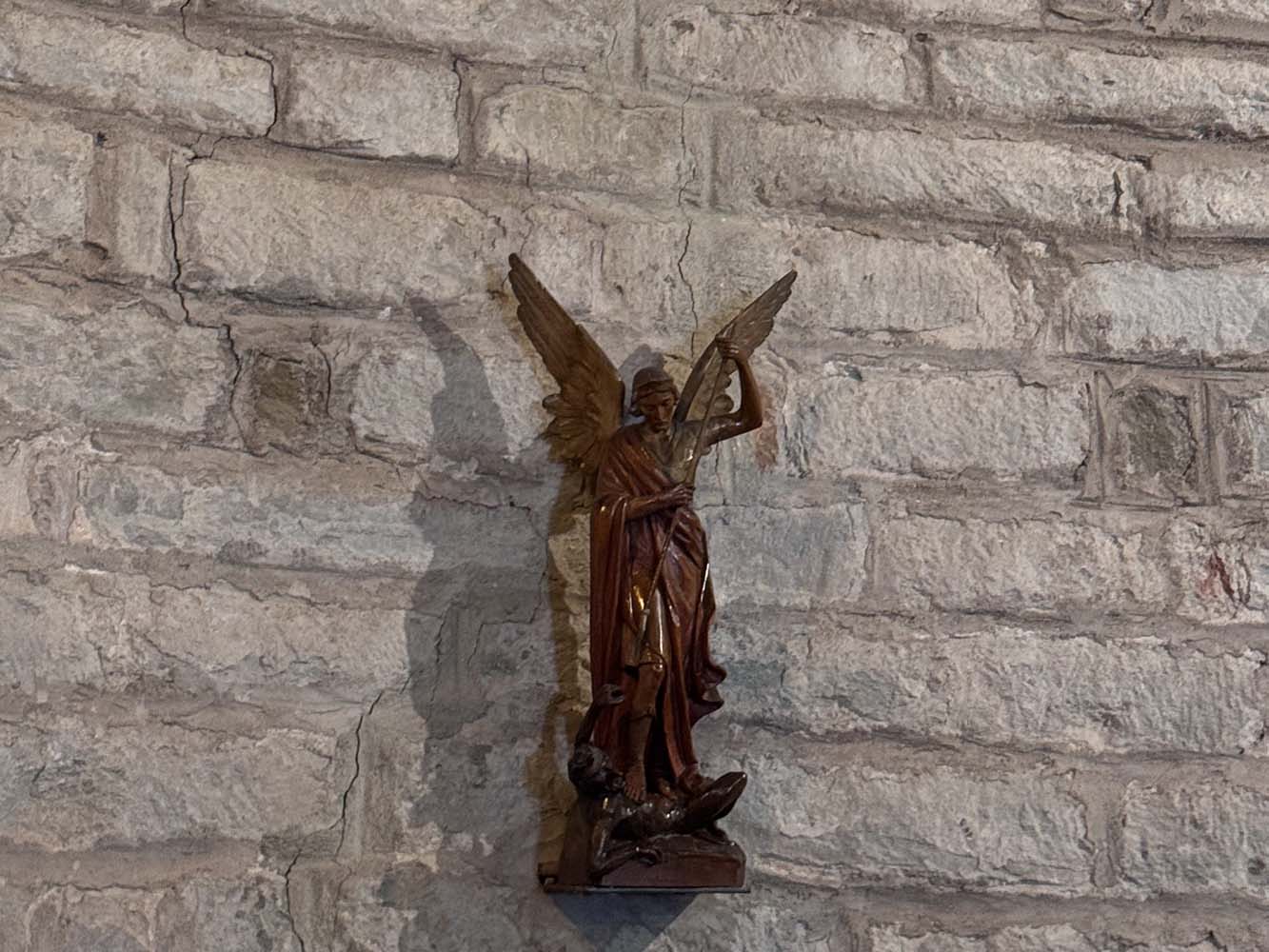
The dedication of our church to Saint Michael the Archangel is a legacy of the Lombard period of this place of worship—although only faint traces of that era remain. The bond between the Lombards and the Saint is deeply significant, to the point of being considered a crucial element of their cultural and religious identity after their conversion to Christianity.
More broadly, Saint Michael the Archangel holds a central role in religious tradition, venerated as leader of the angels, defender of the faith, and protector of the Church.
The church’s architecture
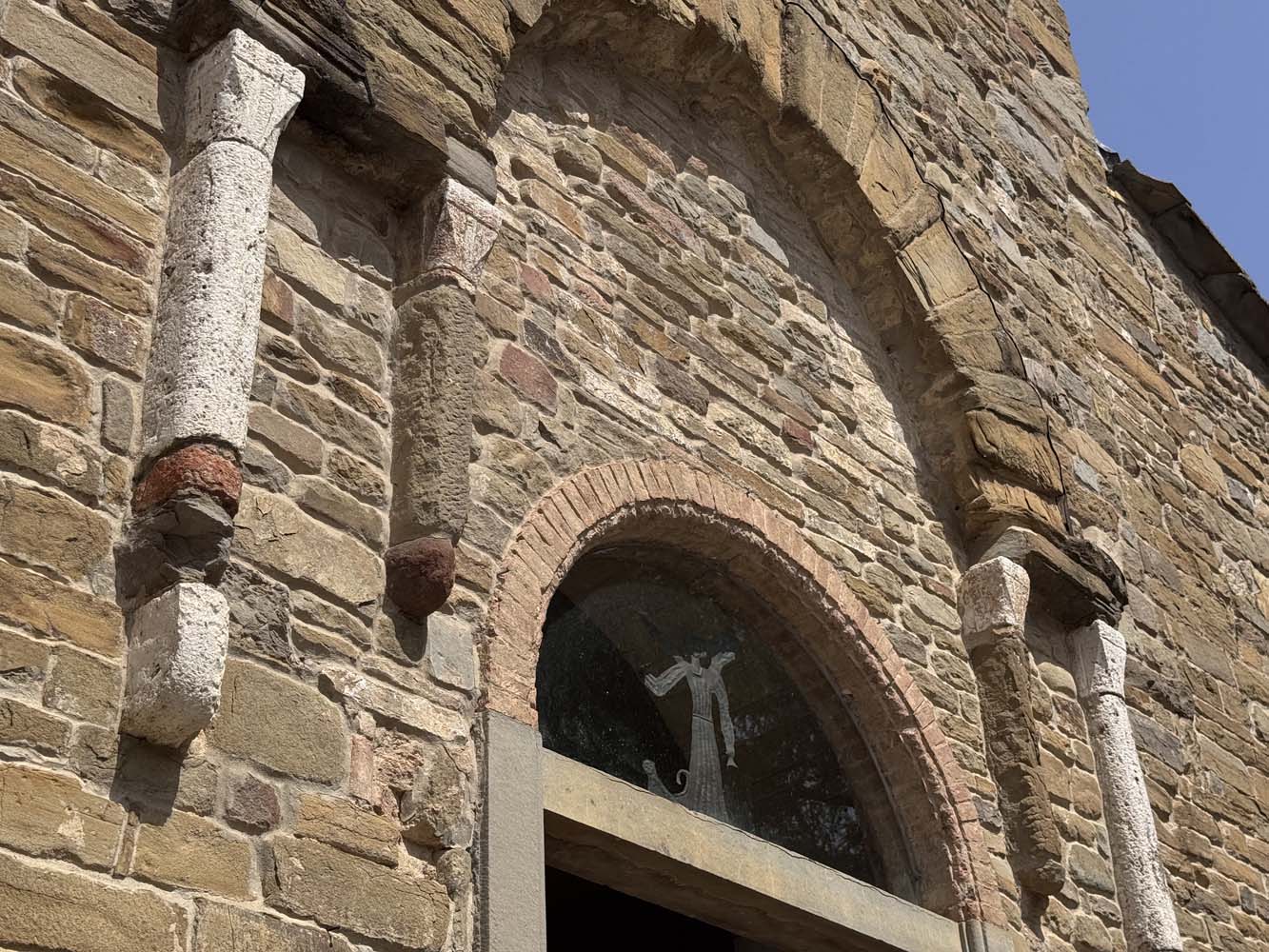
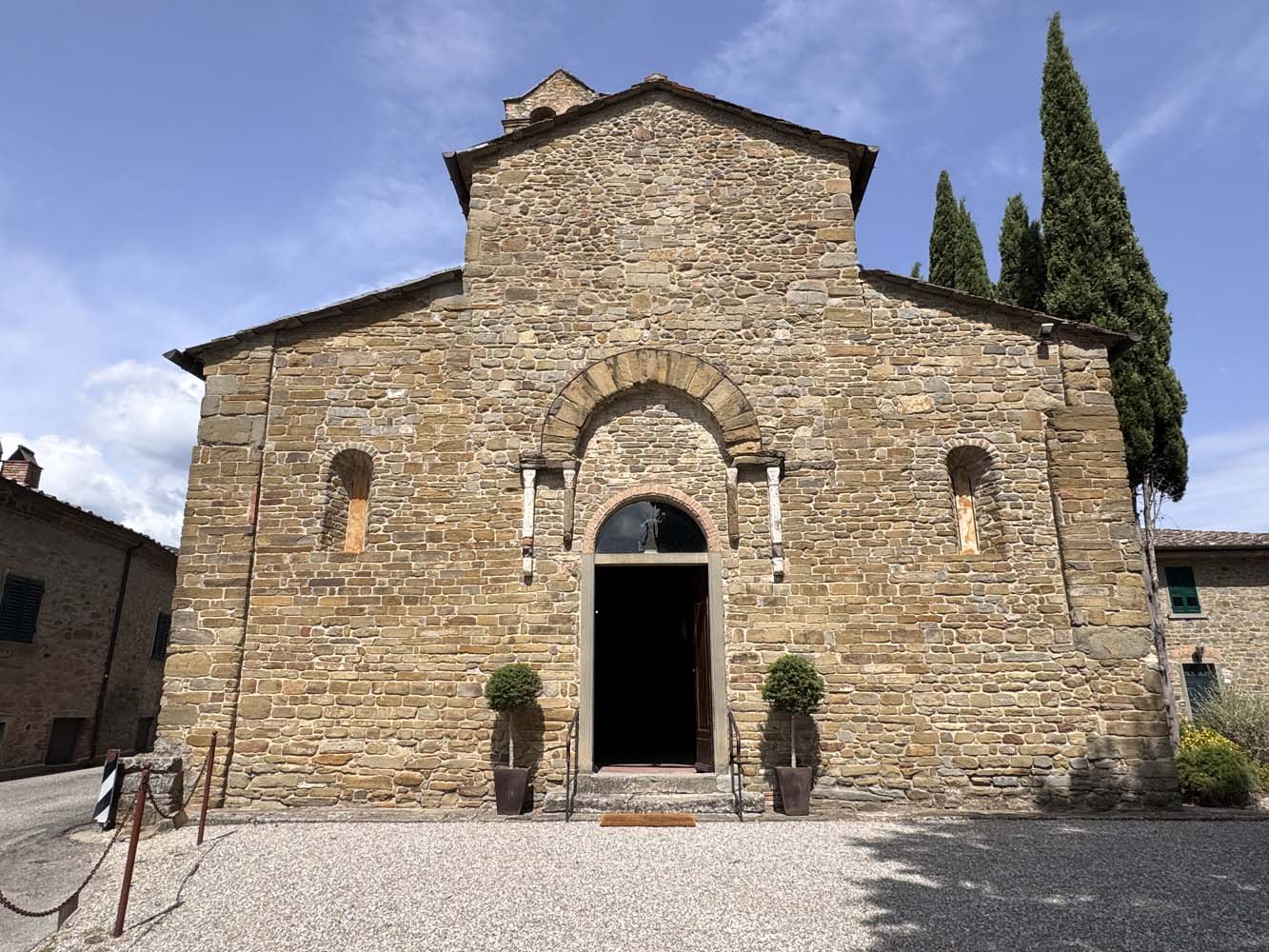
Declared a National Monument in 1907, the church is Romanesque in style. Built of local sandstone with occasional brick inserts, it has a basilica-style plan, meaning it has no transept. The three-part façade reflects the internal layout of three naves with apses at the east end. The entrance portal is made of pietra serena with a rounded arch; above it is a suspended protiro (a narrow “canopy” supported by brackets) with small columns and travertine capitals. On either side of the entrance are two single-light windows (monofore), now walled up. Certain irregularities in the masonry have led to the hypothesis that the church was built over a pre-existing tower, incorporated into the façade.
Interiors: entrance and naves
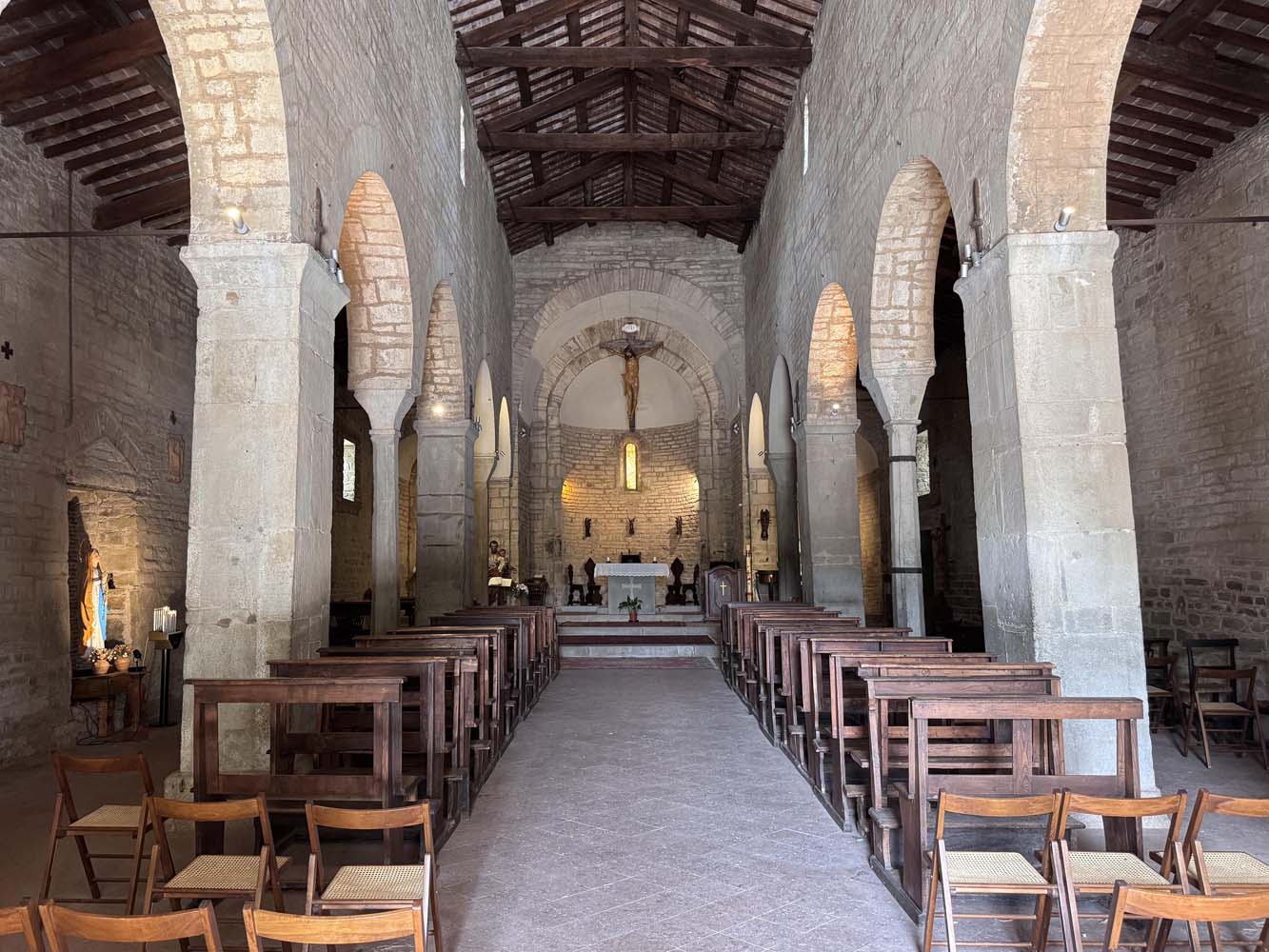
The interior has three naves: the central nave is taller and twice as wide as the side aisles. The entrance portal—whose lintel supports a copper Saint Michael the Archangel by Carlo Anzini—leads into a vestibule with a barrel vault. This vault supports an elevated, square room above, with a tall window opening onto the central nave.
The axes of the vestibule’s spine walls continue into the two rows of pillars and columns: six rounded arches on each side divide the naves.
Interiors: presbytery and apses
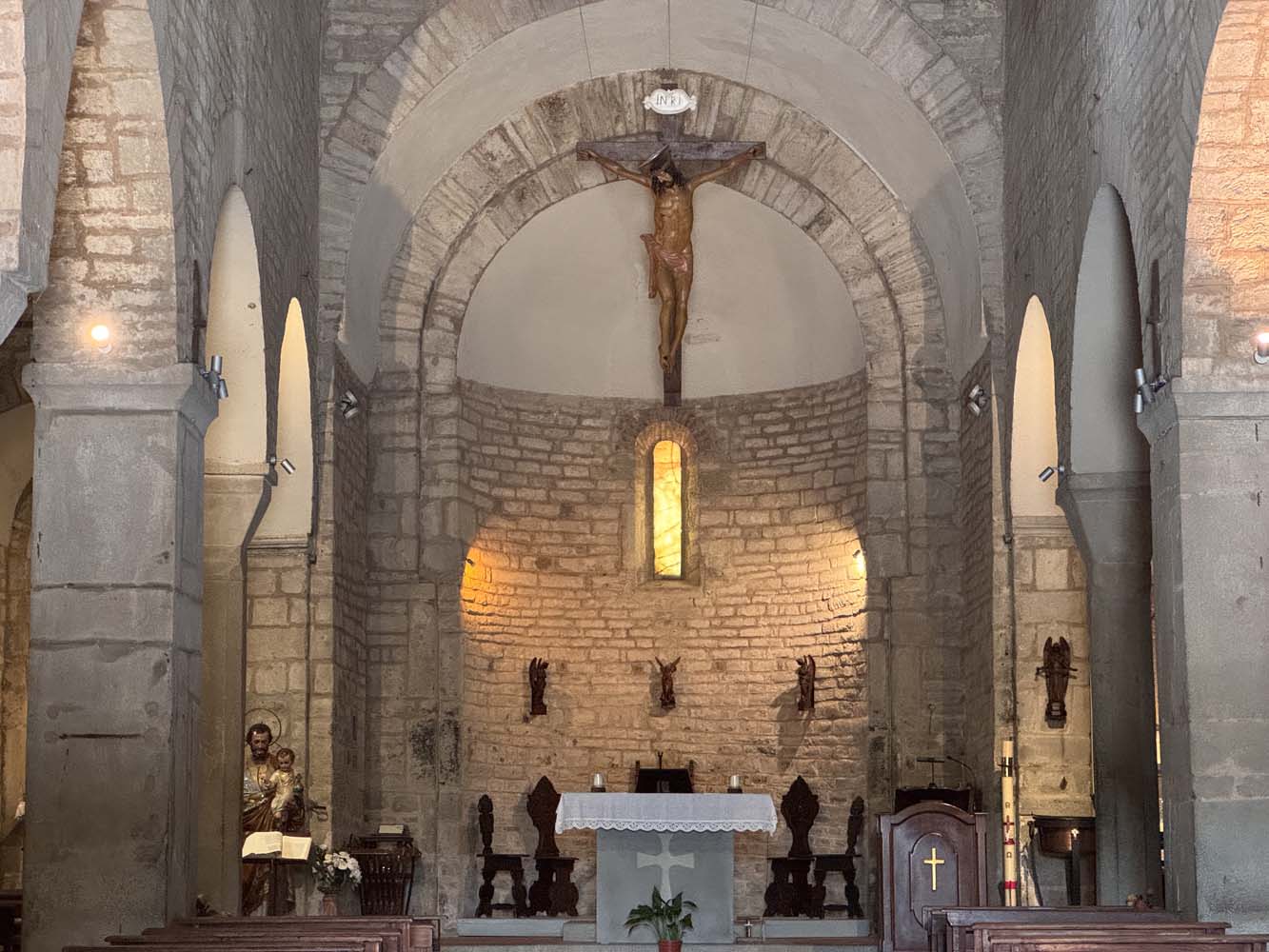
The church features a raised presbytery, with steps leading up to the high altar, which is made of pietra serena and is simply crafted. At the back are the three apses. At the height of the high altar, the ceiling becomes a barrel vault that ends in the semi-dome of the central apse, almost symmetrically echoing the entrance vestibule. Above the vault—on the front wall—hangs the large crucifix from the Church of Santa Maria in Metelliano.